
Duolingo’s Marketing and UX Strategy: The Language of Global Success
Duolingo is not just a language learning app; it’s a global phenomenon that seamlessly integrates marketing, psychology, and gamification. By managing its product and brand identity with strategies based on scientific studies, the company has achieved a crushing competitive advantage. As we at Cohoo believe, the inseparable connection between design and marketing lies at the heart of its success.
I. UX/UI Design and User Psychology: Creating Habits
Duolingo’s success in product design lies not only in its beautiful interface but also in its deep understanding of user psychology. This design is based on academically proven mechanisms that keep users coming back to the app.
A. Gamification and Motivation
Duolingo transforms traditional learning into an entertaining game by using leaderboards, levels, and reward systems. Academic research has proven that these gamification elements significantly increase user motivation and retention for long-term goals like language learning (Hamari, 2013). This process aims to provide satisfaction and make the app a routine.
B. Pushy Notifications and the Fear of Missing Out
The reminder notifications sent by the Duo mascot, the app’s most famous feature, are not simply reminders. They are based on the Loss Aversion Effect in psychology (Wang & Wang, 2023). The warning, “You’ll lose your streak!”, triggers the user’s fear of losing their progress, compelling them to return to the app. Such UX principles are key to creating a daily usage habit.
C. Personalized Gamification and Adaptation
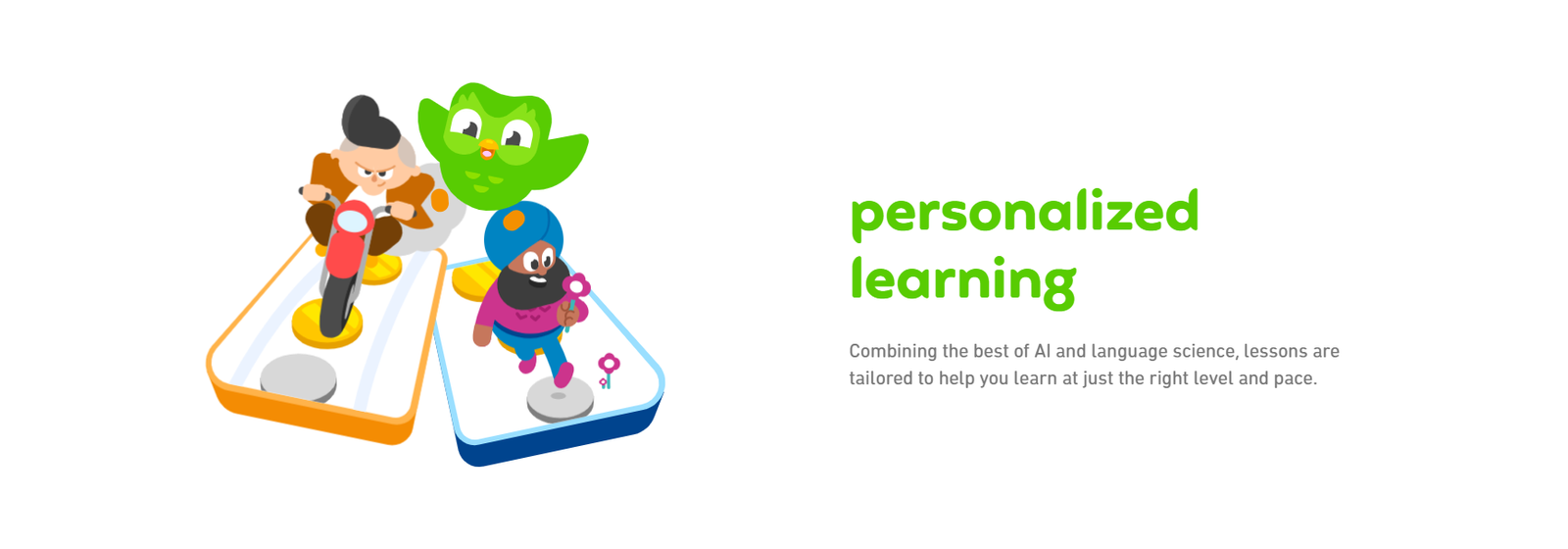
The app’s gamification isn’t one-size-fits-all. Duolingo continuously analyzes user data, personalizing lessons and review cycles based on each student’s individual performance and error types. This adaptive learning approach is supported by research in educational sciences and cognitive psychology. Personalized feedback and content delivery significantly increase learning effectiveness, speed, and user motivation compared to standard content. By focusing on user weaknesses, the app minimizes waste (repeating what’s already known) and maximizes learning.
II. Marketing Strategy: Global Brand, Local Voice:
Duolingo’s marketing success follows a model described in academic studies as viral and responsive. The brand develops a unique language for each market while maintaining its global identity.
A. Brand Identity and the Power of the Mascot
Duolingo’s owl mascot, Duo, is the brand’s global face and the center of its marketing strategy. Academic studies show that having a brand mascot increases brand recall and emotional connection (Reddy & Sathish, 2023). Duo’s humorous, sometimes even intimidating, personality on social media has enabled the brand to connect with a young audience and generate viral content.
B. Hyper-Localization Strategy
Duolingo doesn’t just translate languages; it adapts its social media content and marketing campaigns to the cultural nuances and current events of each country. For example, a popular TV series or a local meme in one country is quickly integrated into Duo’s communications. Marketing literature demonstrates that this type of cultural localization significantly enhances brand credibility and consumer engagement in the local market, increasing overall marketing effectiveness (De Mooij, 2010). This strategy ensures that Duolingo feels “local” in each market.
C. Character Diversity and the Power of Connectivity
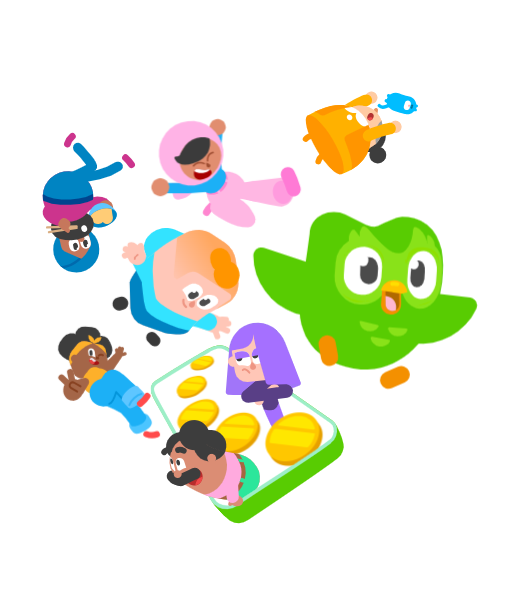
Duolingo consciously prioritizes cultural and physical diversity in the character set it uses to present lessons and stories in the app. This allows users to see characters that reflect themselves or their surroundings. Communication studies show that offering a variety of characters within a brand increases brand inclusivity, strengthens emotional connection, and builds brand loyalty, especially among new generations of users. This diversity is not merely an aesthetic choice; it is a strategic decision that creates a sense of belonging on a global scale.
Conclusion: The Power of Synergy
Duolingo’s success is a prime example of combining high-quality UX/UI with psychology-based learning processes, then scaling with a culturally intelligent marketing strategy. Academic research shows that such integrated strategies deliver far more effective and sustainable growth than mere advertising spending.
At Cohoo, we integrate the disciplines of Marketing, Design, and Business Management to ensure your product doesn’t just look good, but thrives in the market with scientifically-backed strategies. For more information about our services:
Resources:
De Mooij, M. (2010). Global Marketing and Advertising: Understanding Cultural Paradoxes https://www.researchgate.net/publication/311976590_GLOBAL_MARKETING_AND_ADVERTISING_UNDERSTANDING_CULTURAL_PARADOXES
Hamari, J. (2013). Defining Gamification – A Service Marketing Perspective. Proceedings of the 2013 16th International Academic MindTrek Conference. https://www.researchgate.net/publication/259841647_Defining_Gamification_-_A_Service_Marketing_Perspective
Wang, C., & Wang, Y. (2023). The Application of Loss Aversion and Sunken Costs in Behavioral Economics: A Case Study. Harvard Business and Entrepreneurship Magazine, 2(1), 1–15. https://www.researchgate.net/publication/394824360_The_Application_of_Loss_Aversion_and_Sunken_Costs_in_Behavioral_Economics_A_Case_Study
Reddy, B. V. V., & Sathish, A. S. (2023). Creating Connections Through Characters: A Study of Brand Mascots and Their Influence on Consumer Purchase Intentions. International Journal of Professional Business Review, 8(4), 1–20.
https://iads.site/wp-content/uploads/2024/02/Creating-Connections-Through-Characters-A-Study-of-Brand-Mascots-and-Their-Influence-on-Consumer-Purchase-Intentions.pdf