Sustainability in Design 3:
Emotional Connection for Product Lifespan
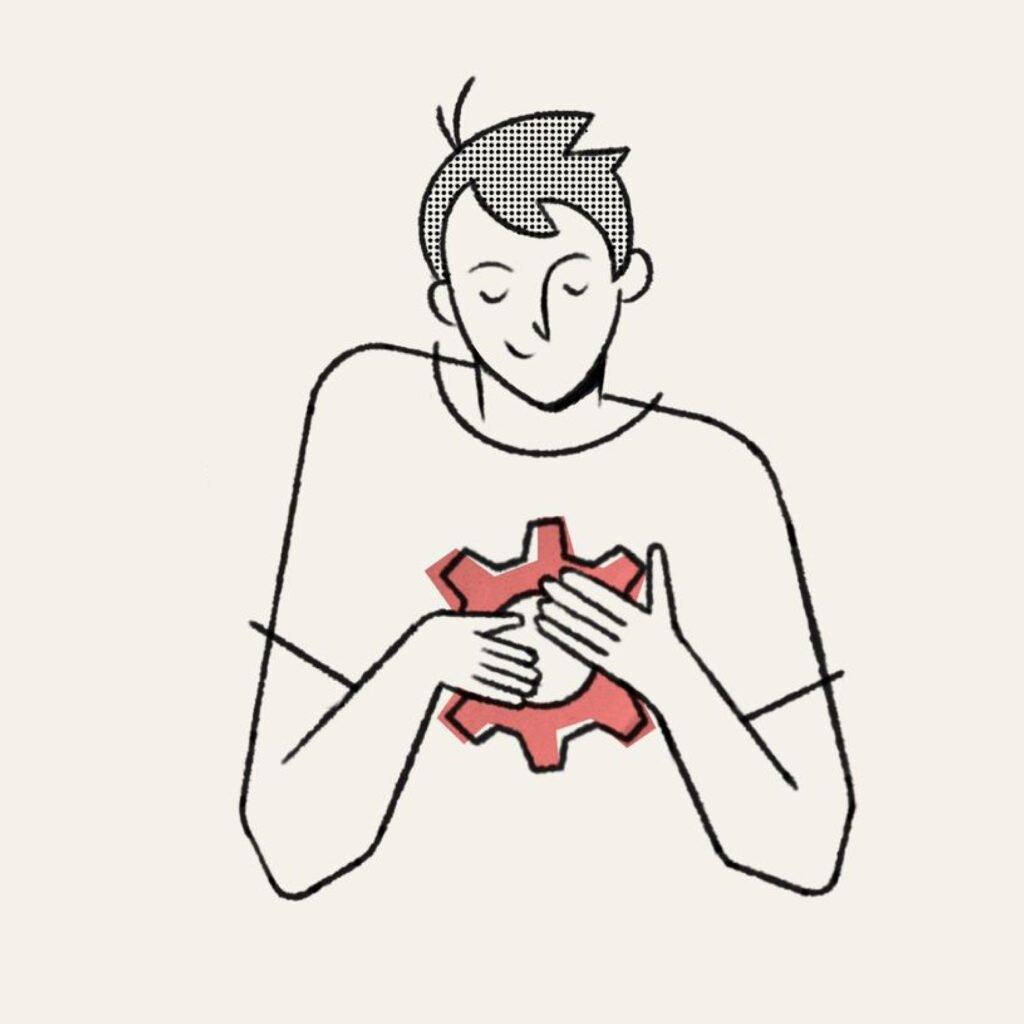
In modern industrial societies, the fact that products become waste long before their physical lifespan is one of the biggest sustainability problems created by the “buy-make-discard” model. Consumer culture uses products as “existential mirrors,” allowing individuals to reflect their desires; however, this leads to the rapid devaluation of existing objects in the face of the allure of the new. To break this cycle, the proposed Emotional Durability approach argues that design should focus not only on physical durability but also on the lifespan of the psychological bond between the user and the object.
One of the strongest factors in creating product loyalty is the principle described in the literature as “Labor Leads to Love.” According to this principle, the more time and effort an interaction requires (for example, learning a skill or personalizing an object), the greater the likelihood that the user will receive a reward from that experience and become attached to the object. Active user participation in design and production processes (through DIY, crafting, or hacking) transforms them from passive observers into active “producers.” This participation allows the object to move beyond being a mere commodity and become a unique piece reflecting the user’s identity.
The increase in value of objects over time is directly related to their capacity to accumulate narratives. Gifts, inherited items, or materials bearing traces of lived experiences make the object indispensable by representing a shared past. Designers can celebrate imperfections not as deterioration but as aesthetic enrichment by choosing materials and textures that allow products to “age gracefully.” This approach frames the object’s transformation over time as a form of storytelling.
Another strategic way to extend product lifespan is to break the static nature of objects by allowing them to evolve. Bakırlıoğlu and Doğan (2020) define three fundamental iteration strategies for extending product lifecycles within the context of open design: The Adaptive strategy involves physically modifying parts according to user needs; the Additive strategy involves improving functionality by adding new parts to the existing structure; and the Abstractive strategy involves reusing parts for new functions beyond their intended purpose. This flexibility helps the product adapt to changing technology and user preferences.
Consequently, a vision of a sustainable future requires not only manufacturers to offer repairable products but also users to repair the bond they form with their objects. Emotional resilience strategies position the consumer not merely as a “buyer,” but as an integral part of the object’s lifecycle, adding value and protecting it. When this bond is established, repair and maintenance cease to be a “burden” and transform into “product care” practices that express love and appreciation.
Kaynaklar
Bakırlıoğlu, Y., & Doğan, Ç. (2020). Exploring Product/Part Longevity in Open Design of Small Kitchen Appliances. The Design Journal, 23(6), 885-905.
- Haines-Gadd, M., Chapman, J., Lloyd, P., Mason, J., & Aliakseyeu, D. (2018). Emotional Durability Design Nine—A Tool for Product Longevity. Sustainability, 10(6), 1948.
- Hernandez, R. J., Miranda, C., & Goñi, J. (2020). Empowering Sustainable Consumption by Giving Back to Consumers the ‘Right to Repair’. Sustainability, 12(3), 850.
- Yazirlıoğlu, L., Kohtala, C., & Wiltse, H. (2025). Healing through collective textile-making: Crafting objects, places, and communities. In Nordes 2025: Relational Design. Design Research Society.