Furniture for a Small Living Room: The Rule of Visual Weight
In a small living room, a piece’s visual weight matters more than its size. Furniture on visible legs, with slim profiles, open bases and surfaces that reflect or let light through, keeps the floor in view; when the eye sees the floor running to the walls, the room reads as larger than it is. Two coffee tables of the same size can feel completely different: one fills the room, the other barely seems to take up space.
What is visual weight?
Visual weight is how much space an object seems to occupy, which is not the same as its real volume. A closed cabinet down to the floor and an open shelf on slim legs can cover the same area, yet one looks heavy and the other light. Four things decide it:
- Floor visibility: can you see the floor beneath the piece?
- Profile thickness: how thick are the legs, frame and edges?
- Openness: can you see through it, or is it a solid mass?
- Surface: does it absorb light, or reflect or transmit it?
Heavy vs light choices
| Looks heavy | Looks light |
| Box sofa sitting on the floor | Sofa on visible legs with an open base |
| Thick wooden coffee table with a solid base | Table with a slim metal frame or glass top |
| Closed cabinet down to the floor | Open shelving or wall-mounted unit |
| Dark, matt surfaces | Light colours and reflective metal |
| Many small pieces | Fewer, well-chosen pieces |
Open-based furniture
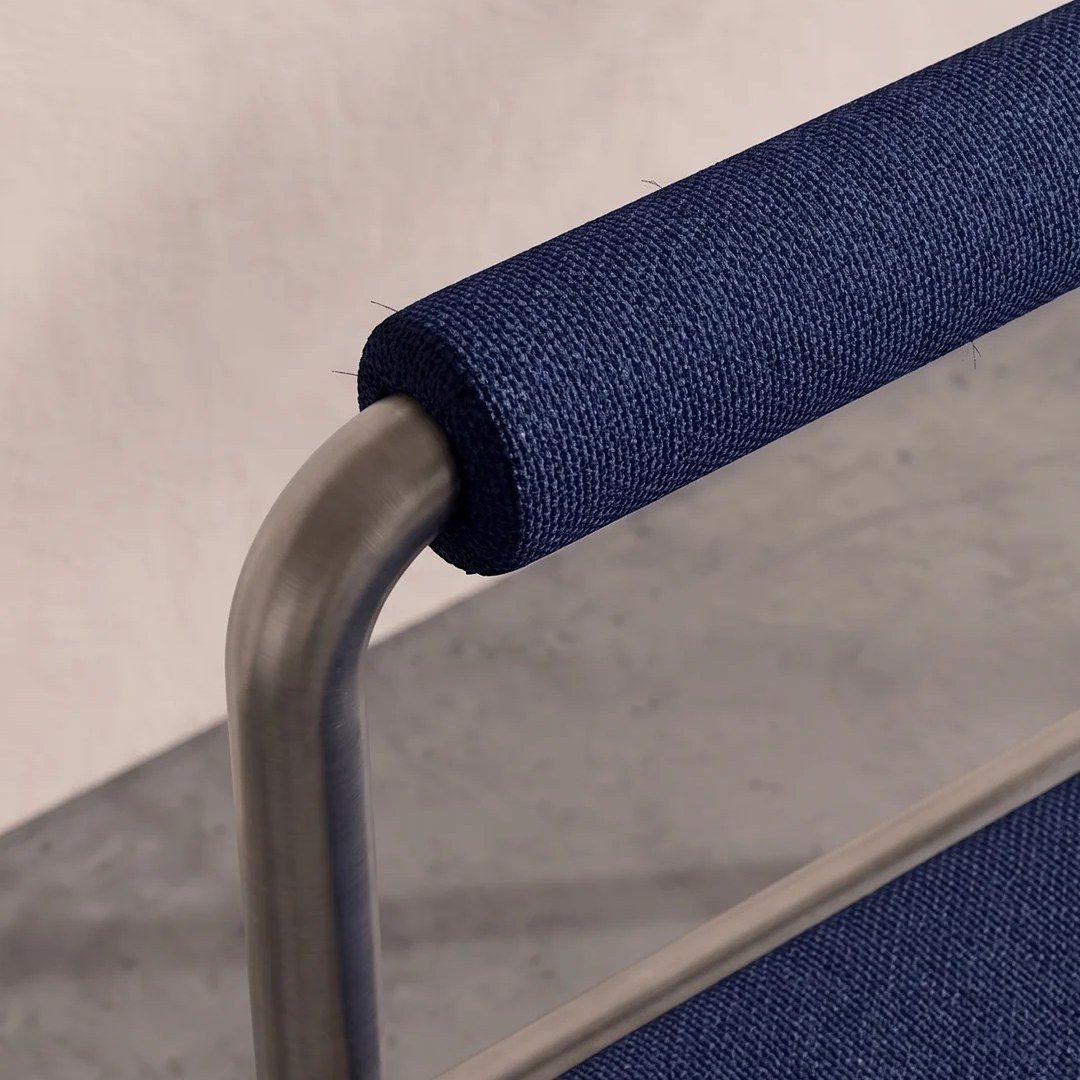
Letting the floor continue beneath the furniture is the single most effective rule in a small room. Thin bent stainless steel tube or plate works well in small spaces for this reason: it needs a much slimmer section than wood to carry the same load, and the piece becomes a line.
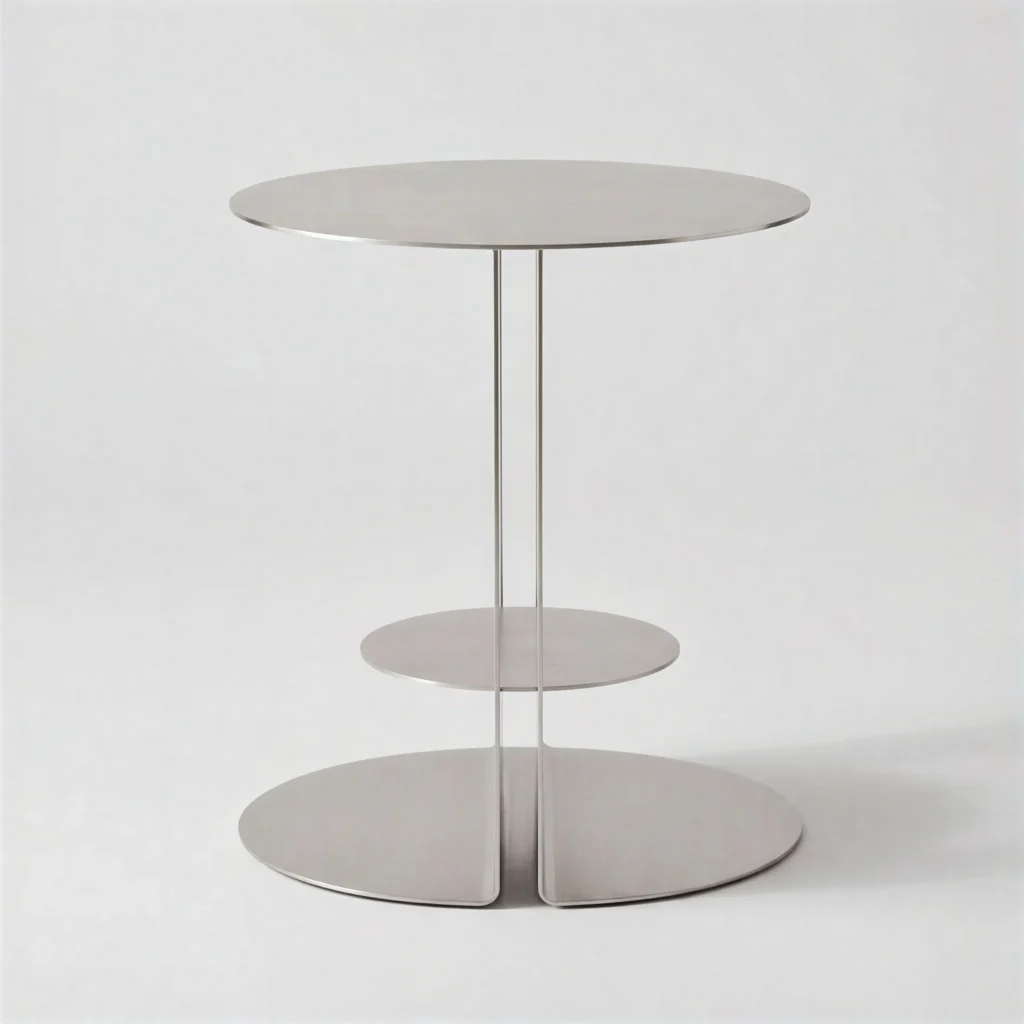
Cohoo’s Nuuo Side Table has an open shelf between two bent plates, so you see through it. Its polished or satin surface reflects the light and colours around it, so the table recedes into the room.
Pieces that do more than one job
- Nesting tables: pull apart when needed, slide together into the footprint of one. The Trio Nesting Table is designed for this.
- Side tables with a shelf: a surface and storage in one, reducing the need for a separate bookcase or plant stand.
- Movable pieces: light tables and rolling caddies that can be pushed aside when guests arrive.
Keep the measurements
Even light-looking furniture narrows a room if placed badly. The most often broken measurements in small living rooms:
- Main walkways at least 75 cm (30 in); sofa to coffee table 35 to 45 cm (14 to 18 in). Details in how far should a coffee table be from the sofa.
- The coffee table should not exceed sofa seat height; a tall table stands like a wall in front of the seating. See what height should a coffee table be.
Light and vertical space
Dark corners shrink a room. A floor lamp in a corner lights the walls and ceiling and pushes the room’s edges back. How much light a room needs by size is calculated in how many lumens does a living room need.
When the eye is drawn upwards, the ceiling rises. A tall, slender floor lamp, wall-mounted shelves and plants lifted off the floor create a vertical line and leave the floor free.
Frequently asked questions
Should a sofa in a small living room have legs?
Yes, if possible. The floor shows beneath a sofa on legs and the room feels larger. A box sofa of the same size looks heavier.
What can replace a coffee table in a small living room?
Two small side tables or a nesting set. Both can be moved aside to open the path.
Does metal furniture make a small room feel cold?
On its own it can look hard. With wood floors, fabric upholstery and plants, metal furniture adds lightness while the other materials bring warmth.
What is the quickest way to make a small living room look bigger?
Open up the floor. Replacing one or two floor-hugging pieces with raised, open-based alternatives makes a bigger difference than repainting.
Sources: U.S. Access Board, ADA Standards, Chapter 4: Accessible routes