How to Protect Wood Floors from Potted Plants: Saucers, Risers and Caddies
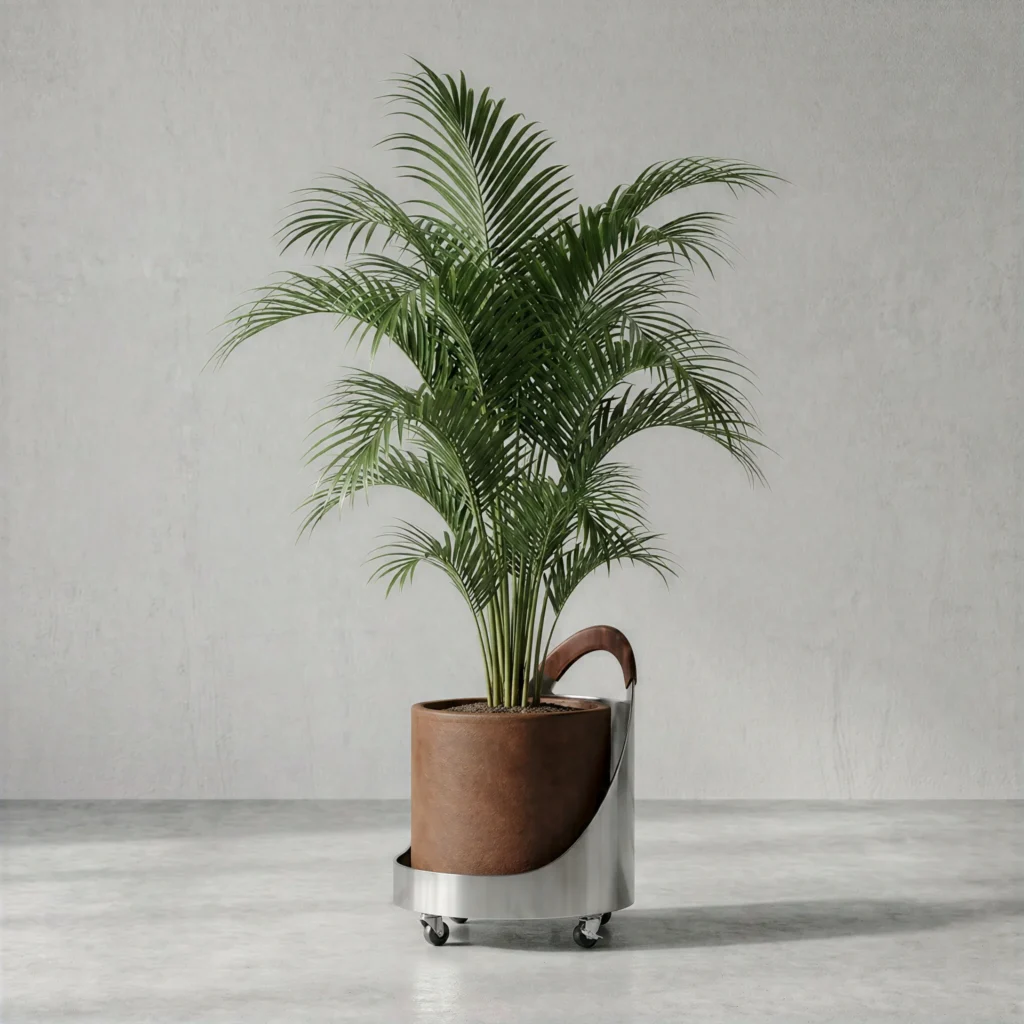
The way to protect a wood floor from a potted plant is to separate the pot from the floor: a saucer catches the water, and a riser or rolling caddy lifts the saucer off the floor so air can pass underneath. Most water rings, hidden mould and scratches from dragged pots come from a pot or saucer sitting directly on the floor.
How potted plants damage floors
Wood is porous and absorbs water. Solid wood floors take it in through the surface; laminate and engineered floors take it in at the joints between boards. Wet wood first discolours, then swells and cups.
The damage comes in three ways:
- Overflow. Water from the drainage hole fills the saucer and spills over, or spreads straight onto the floor if there is no saucer.
- Condensation. A saucer full of cold water sweats on its outside. Even if the saucer itself never leaks, the floor beneath it stays damp. This is why marks often appear as a neat ring exactly under the saucer.
- No airflow. When a pot or saucer sits flat on the floor, moisture underneath cannot evaporate. That dark, damp, airless patch is ideal for mould, and it goes unnoticed until the pot is lifted.
Saucer, riser or caddy: what each one does
| Saucer | Riser or stand | Rolling caddy | |
| What it does | Catches drainage water | Lifts the pot off the floor | Lifts the pot and moves it |
| Air gap above the floor | No | Yes | Yes |
| Prevents condensation rings | No, often the cause | Yes | Yes |
| Makes heavy pots easy to move | No | No | Yes |
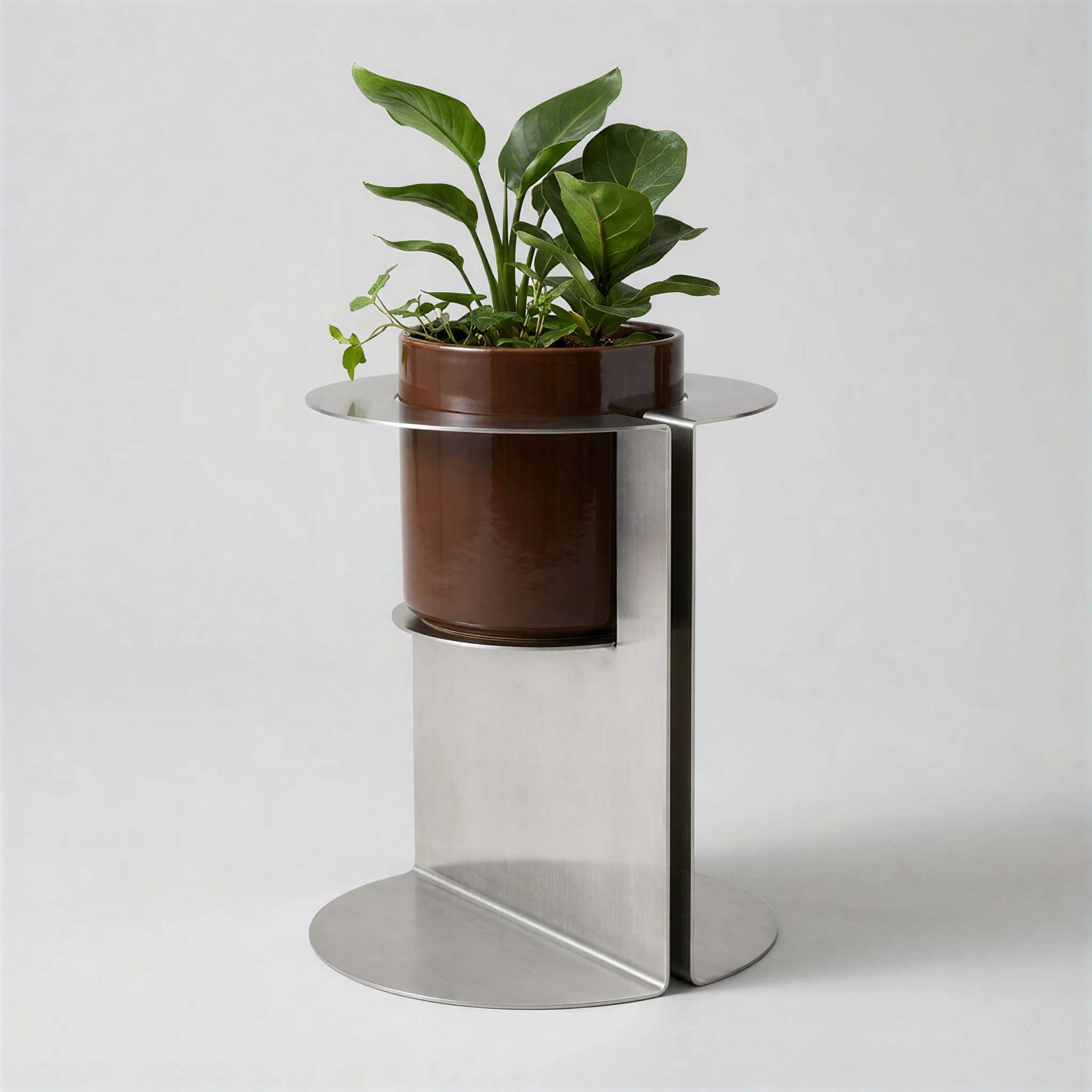
In practice the best result comes from keeping the saucer and adding an air gap beneath it. The saucer catches the water, and the riser or caddy keeps the saucer off the floor so moisture underneath can dry.
Why the air gap matters
Even a few centimetres between pot and floor change two things. Air moves, so condensation dries instead of building up. And the underside becomes visible, so you notice spilled water or an early mark the same day rather than weeks later.
Cohoo’s Cult caddy is built on this idea: a 30 cm (12 in) stainless steel platform, 14 cm (5.5 in) high including the wheels, with a fully open underside. Air passes beneath it and the floor always stays in sight.
Heavy pots: the second job
Most people underestimate how heavy a large pot gets. Saturated potting mix can approach 1 kg per litre. A 40-litre pot with soil, water and plant easily passes 40 kg (88 lb). Lifting that for every clean or every change of season is hard on your back and the floor; a dragged pot leaves deep scratches.
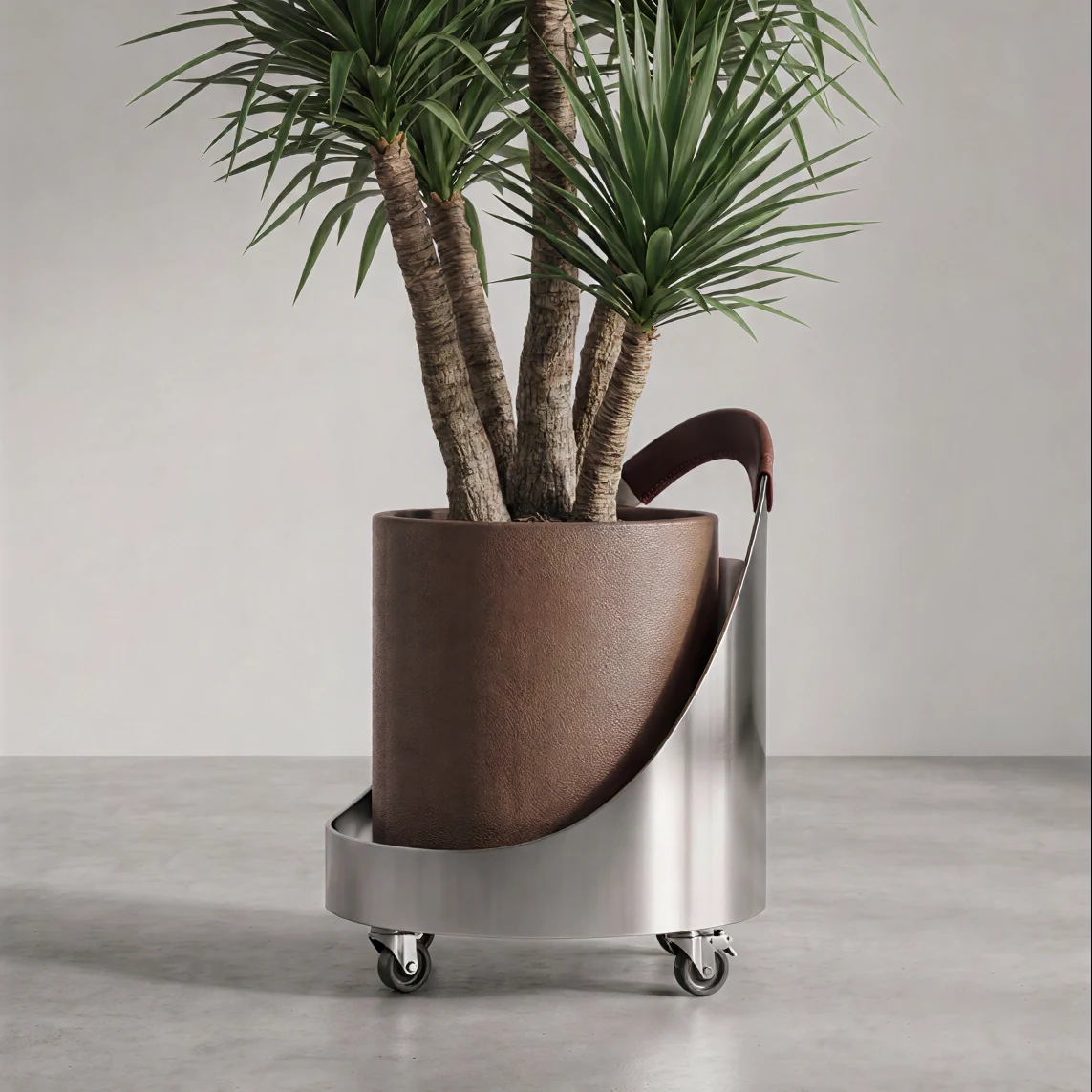
A rolling caddy solves this. Cult carries up to 55 kg (121 lb). For larger plants, Cult Caddy wraps the pot with a stainless steel body and a genuine leather handle: the 35 cm size carries 65 kg, 40 cm carries 90 kg and 45 cm carries 110 kg, with two locking wheels.
Three questions for choosing one
- What is the pot diameter? The caddy should be slightly wider than the pot so the saucer sits on it too.
- What is the total weight? Count the pot, the soil when wet and the plant. The caddy’s load capacity should be above that.
- Will the pot move? If it follows the light through the seasons or gets pulled out for cleaning, choose wheels. If it stays in one corner, a fixed riser is enough.
To plan the caddy together with the rest of a plant corner, our indoor plant display ideas post covers heights and materials.
Frequently asked questions
Can a plant saucer damage a wood floor?
A saucer prevents overflow, but when it sits flat on the floor condensation collects beneath it and can leave a ring. A riser or caddy that leaves an air gap under the saucer removes that risk.
Is a plant caddy the same as a saucer?
No. A saucer catches drainage water. A caddy lifts the pot or saucer off the floor, and a rolling caddy also moves it. They work best together.
Do rolling plant caddies work on carpet?
On short-pile and thin rugs, yes. On thick, deep-pile carpet the wheels sink and pushing gets hard; place the caddy on a hard floor instead.
How much weight should a plant caddy hold?
More than the combined weight of pot, wet soil and plant. As a rough guide, take the pot volume in litres as kilograms and add the weight of the pot itself.
Will a stainless steel caddy rust if it gets wet?
No. Stainless steel does not rust because it gets wet. Just avoid leaving standing water on it for long periods; see our stainless steel furniture care guide.
Sources: USDA Forest Products Laboratory, Wood Handbook: Wood as an Engineering Material