Stainless Steel, Plastic or Wood? Choosing a Plant Caddy Material
Stainless steel for heavy pots and long life, plastic for light pots and a low budget, wood for a warm look. The biggest difference between them is how they handle water: stainless steel does not absorb it and does not deform under load, plastic resists water but tires in sunlight and under weight, and wood absorbs water and needs care.
A plant caddy’s job is to separate the pot from the floor, keep water and moisture off the floor and make a heavy pot easy to move. Our post on protecting wood floors from potted plants covers that job. Here we compare the materials.
Comparison
| Stainless steel | Plastic | Wood | |
| Water resistance | Excellent, does not absorb water | Good, does not absorb water | Poor unless treated, absorbs water, swells and moulds |
| Shape under load | Does not change | Flexes and can crack over time | Strong, weakens with moisture |
| Sunlight | Unaffected | Turns brittle and fades | Colour bleaches, surface dries |
| Lifespan | Decades | A few years | Depends on care |
| Cleaning | Wipe with a damp cloth | Easy | Limited wet cleaning, needs oil or varnish |
| Look | Satin or polished metal, design-led | Functional | Warm, natural |
| Price | Highest | Lowest | Middle |
| Recycling | Fully recyclable | Limited | Biodegradable |
Stainless steel: load and lifespan
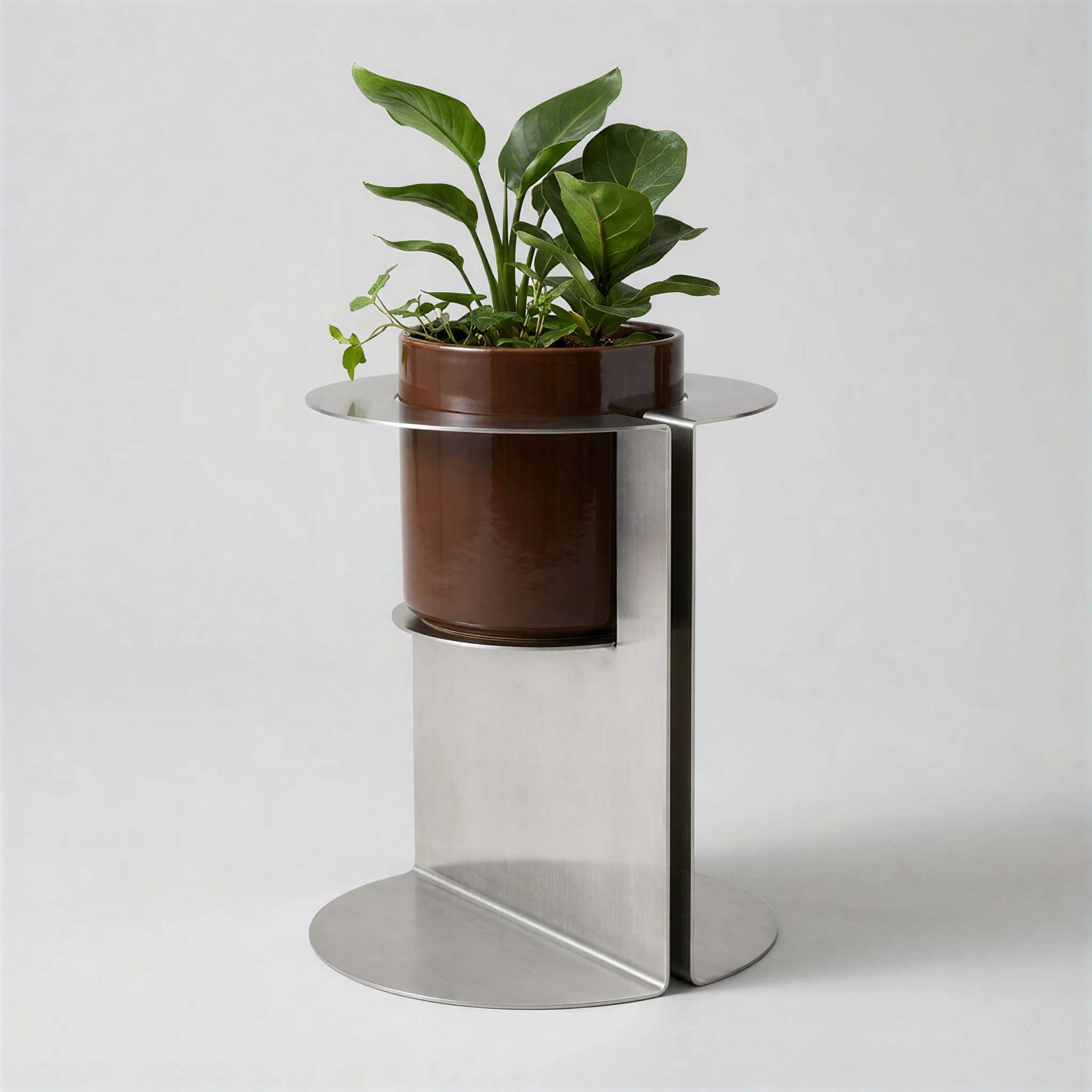
The main strength of stainless steel is that it keeps its shape under heavy load for years. It does not absorb water, so it does not swell, mould or stain the floor. Used correctly it outlasts both the pot and the plant, and at the end of its life it is fully recyclable.
The one thing to watch is water standing still in a narrow gap on the steel for long periods. Why, and what to do about it, is explained in what happens when stainless steel stays wet.
Cohoo’s Cult carries 55 kg (121 lb), and Cult Caddy carries 65, 90 or 110 kg depending on size.
Plastic: for light pots
Plastic caddies resist water, weigh little and cost little. They work for small and medium pots. Their weaknesses show over time: in a sunny window they fade and turn brittle within a few years, the platform flexes under heavy load and wheel fittings loosen. A cracked plastic caddy under a heavy pot is usually the first sign people notice.
Wood: looks and maintenance
Wood gives a warm, natural look and suits wooden furniture. But for a material that lives under a pot, one of the dampest spots in the home, its relationship with water is weak. Untreated wood absorbs water, swells, darkens and grows mould. Oily species such as teak and acacia hold up better but still need regular oiling. If you choose wood, always use a saucer on top and never let it overflow.
Which one when?
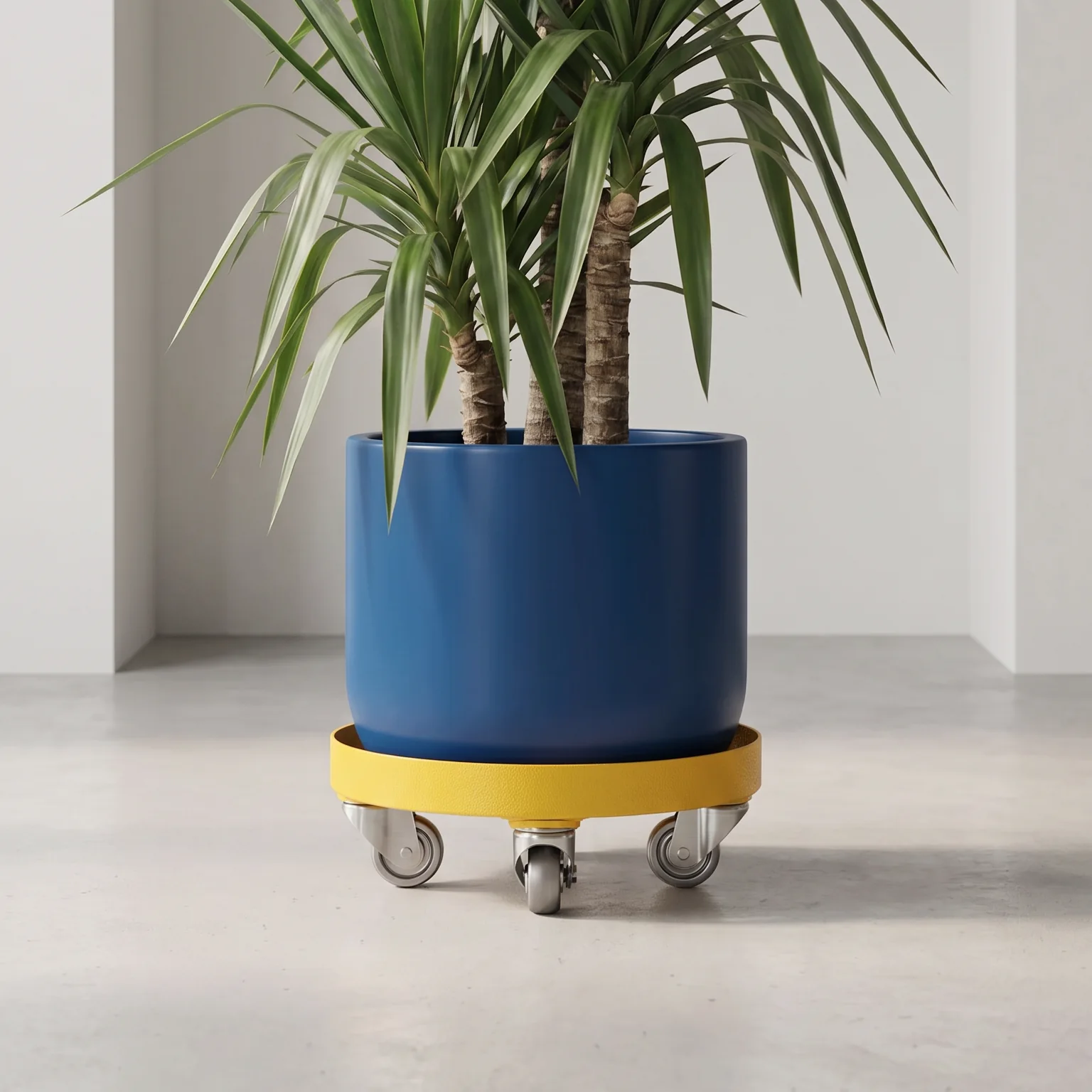
- Large pots over 40 litres, yucca, palms, monstera: stainless steel. Load and lifespan decide.
- Small pots, plants that change often, a tight budget: plastic.
- A wood-heavy interior, light pots, and you can keep up with care: wood.
- Balconies and outdoors: stainless steel or UV-resistant plastic. Wood wears fastest outdoors.
To think about the whole plant corner beyond the material, our indoor plant display ideas post shows how to tie different heights together with one material.
Frequently asked questions
What is the most durable plant caddy material?
Stainless steel. It does not absorb water, does not degrade in sunlight and keeps its shape under heavy load. Used correctly, it lasts decades.
Can I use a wooden plant caddy on a balcony?
You can, but it will wear fastest. Rain, sun and watering dry it out and swell it. Outdoors, stainless steel or UV-resistant plastic lasts longer.
Why do plastic rolling caddies crack?
Sunlight makes plastic brittle over time, and a heavy load keeps flexing the platform. Together they crack it, usually at the wheel fittings.
Will a stainless steel caddy scratch my floor?
On rolling models only the wheels touch the floor. On footed models, felt or rubber pads under the feet protect wood floors.
Sources: worldstainless, Recycling