What Is Stainless Steel and Why Doesn’t It Rust? A Plain Guide to 304
What Is Stainless Steel and Why Doesn’t It Rust?
Stainless steel is an iron alloy containing at least 10.5% chromium by weight. What keeps it from rusting is not paint or plating but a chromium oxide layer that forms on the surface when chromium meets oxygen in the air. The layer is invisible, only nanometres thick, and it re-forms by itself when the surface is scratched. On a plated material a scratch is permanent damage, because once the protective coat is broken the metal underneath is exposed. On stainless steel the surface rebuilds its own protection.
How the chromium oxide layer works
When ordinary steel meets moisture the iron oxidises and rust forms. Rust is porous, so it does not protect the metal beneath it. It lets moisture travel deeper instead. That is why damage on a rusting part does not stop, it advances layer by layer.
In stainless steel, chromium bonds with oxygen far faster than iron does. The resulting chromium oxide film is dense and impermeable, it holds tightly to the metal below and keeps moisture out. When the surface is scratched, the exposed chromium re-oxidises within seconds and the film heals. This behaviour is called passivation, and it explains in one sentence why stainless steel furniture lasts for decades: the protection is not on top of the surface, it is inside the material.
What is 304 stainless steel, and why is it called 18/8?
304 is the most widely used stainless grade in architecture and furniture. The name comes from its standard designation, but the trade usually calls it 18/8. The two numbers give the chromium and nickel content: roughly 18% chromium, roughly 8% nickel. Chromium provides the corrosion resistance, nickel provides toughness and formability. Without nickel the material could not be bent into flowing curves.
| Property | 304 stainless steel |
|---|---|
| Chromium | 18% – 20% |
| Nickel | 8% – 11% |
| Carbon | 0.08% max |
| Manganese | 2% max |
| Density | 7,900 kg/m³ |
| Melting range | 1,400 – 1,450 °C |
| Common uses | Furniture, kitchen equipment, cutlery, architectural cladding |
The low carbon limit matters. As carbon rises, welding causes chromium to combine with it and gather at the grain boundaries, leaving less chromium available to protect the surface. Because 304 caps carbon at 0.08%, welded joints keep most of their corrosion resistance. In curved tubular furniture, where welds are frequent, that translates directly into lifespan.
Does stainless steel really never rust?
No, and it is worth saying so plainly. Stainless steel is resistant to rust, not immune. The factor that breaks its resistance is chloride, in other words salt. Published data shows 304 resisting pitting corrosion in water up to roughly 400 mg/L of chloride at ambient temperature. At 60 °C that threshold drops to around 150 mg/L. Above 60 °C, and under mechanical stress, stress corrosion cracking becomes a further risk.
The numbers sound technical, but the practical reading is simple: inside a home, an office or a restaurant you never come close to those thresholds. A coastal terrace exposed to salt spray, the edge of a chlorinated pool, or a street frontage salted in winter is a different story. That is where 316, which contains molybdenum, enters the conversation.
Not every mark is rust
Orange brown specks sometimes appear on a stainless surface. Most of them are not the steel corroding but free iron particles stuck to it and rusting. The source is usually nearby: ordinary steel cut in the same room, a steel wool pad, dust from the bottom of a tool bag. The particle rusts, the mark shows on the stainless surface, but the material underneath is sound. A soft cloth and a suitable cleaner remove it and the surface returns to normal. Our stainless steel furniture care guide covers the method.
What 304 means in a piece of furniture
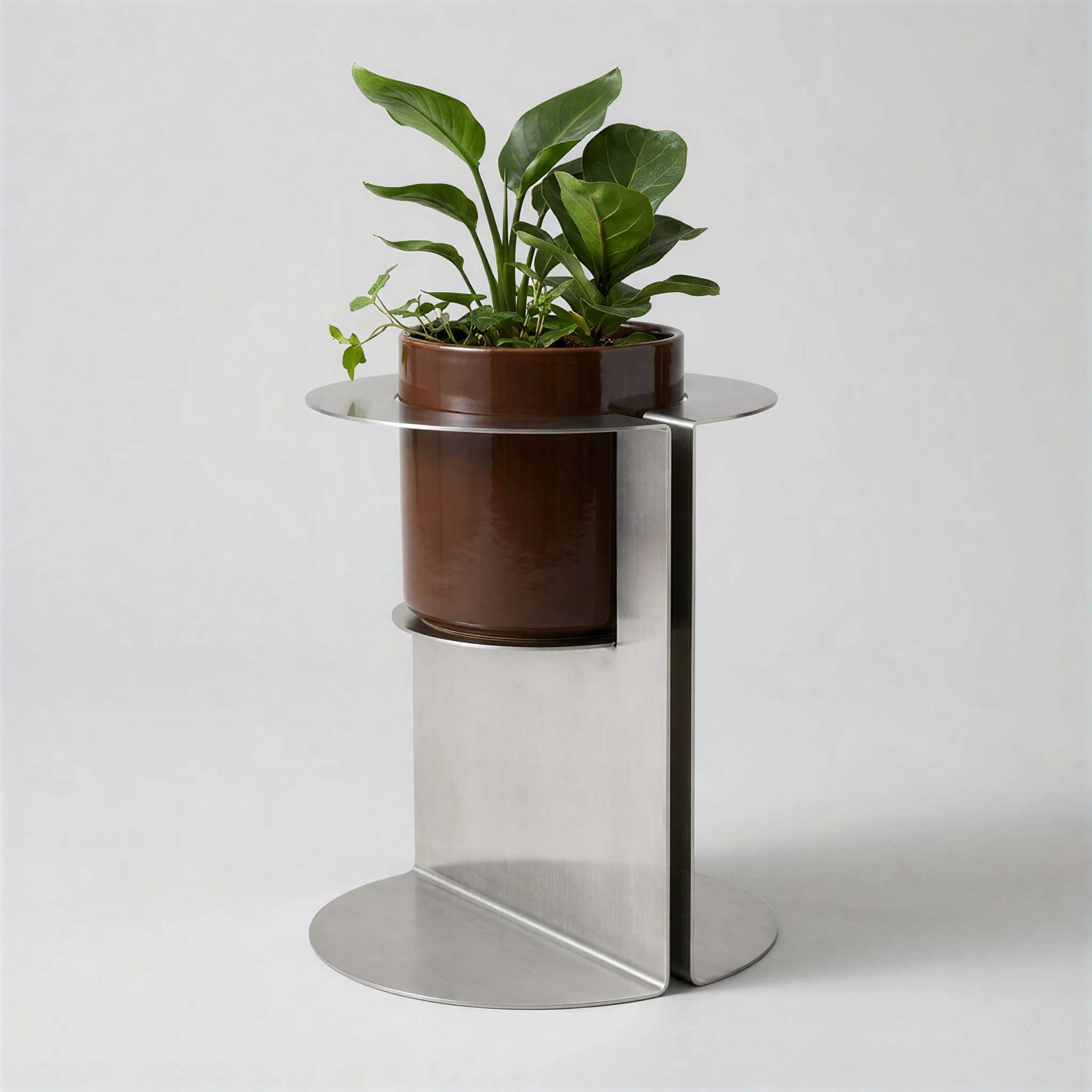
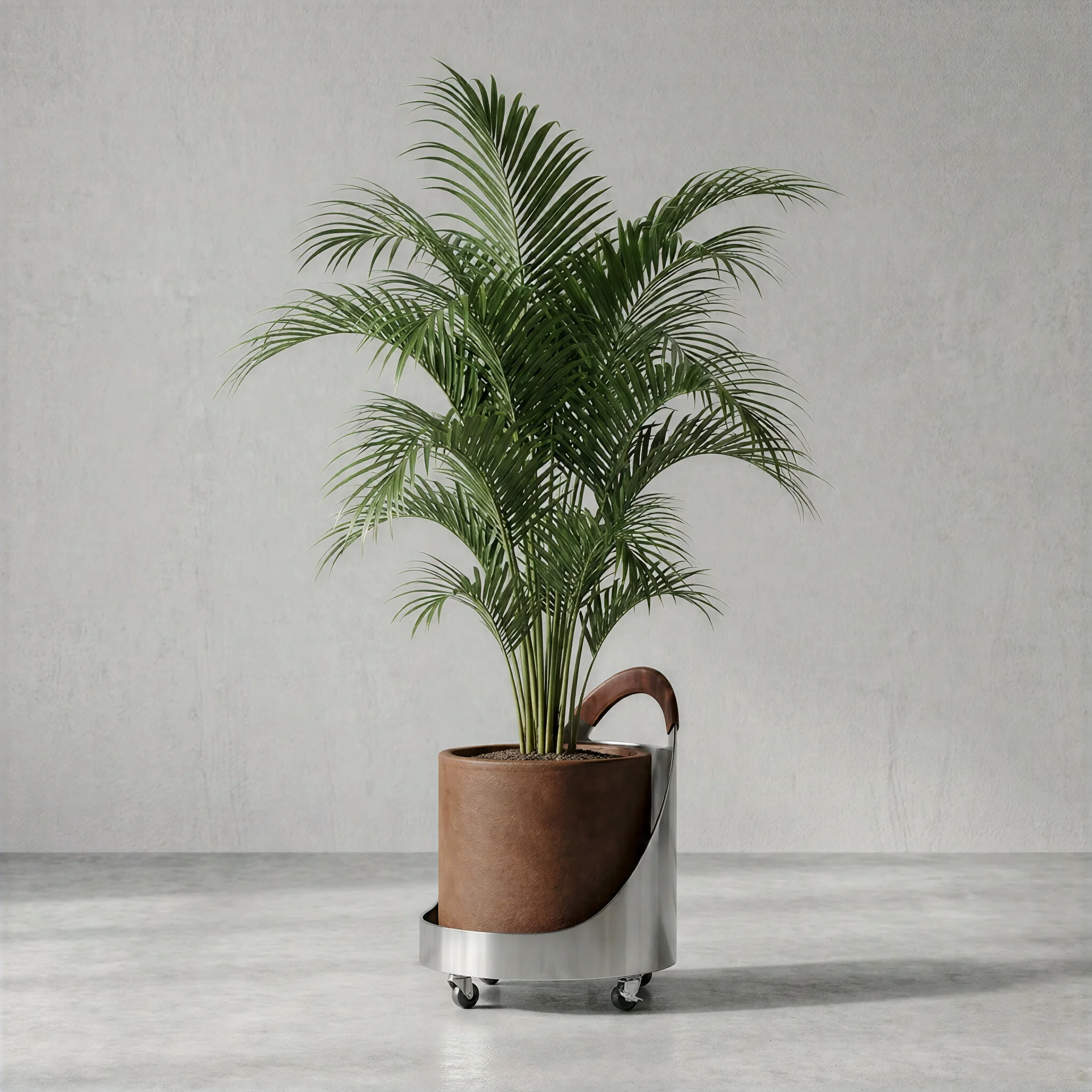
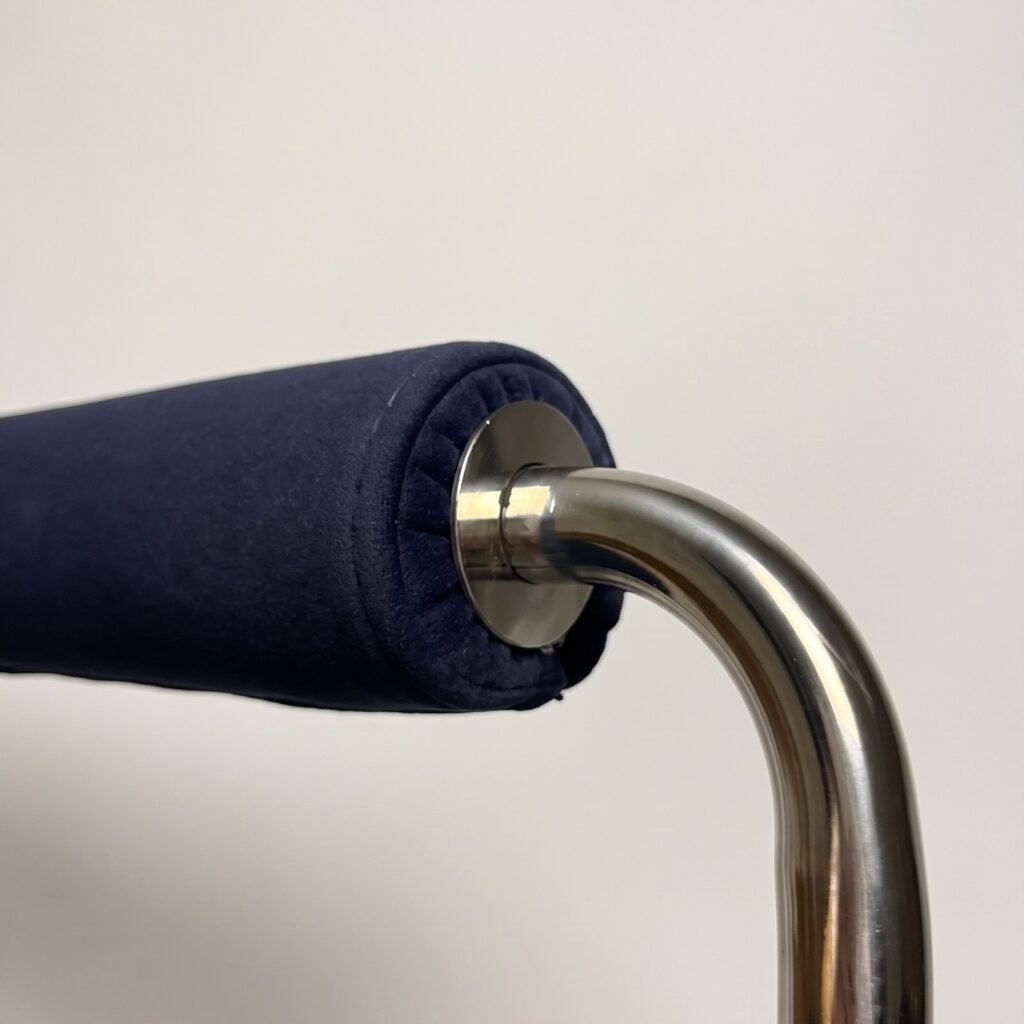
Cohoo products are built around a 304 stainless steel body. In daily life that choice means the material does not swell with humidity, does not rot, does not lift away in layers, and can be restored when scratched. Damage that is irreversible in wood or plated metal is usually a surface job on stainless steel.
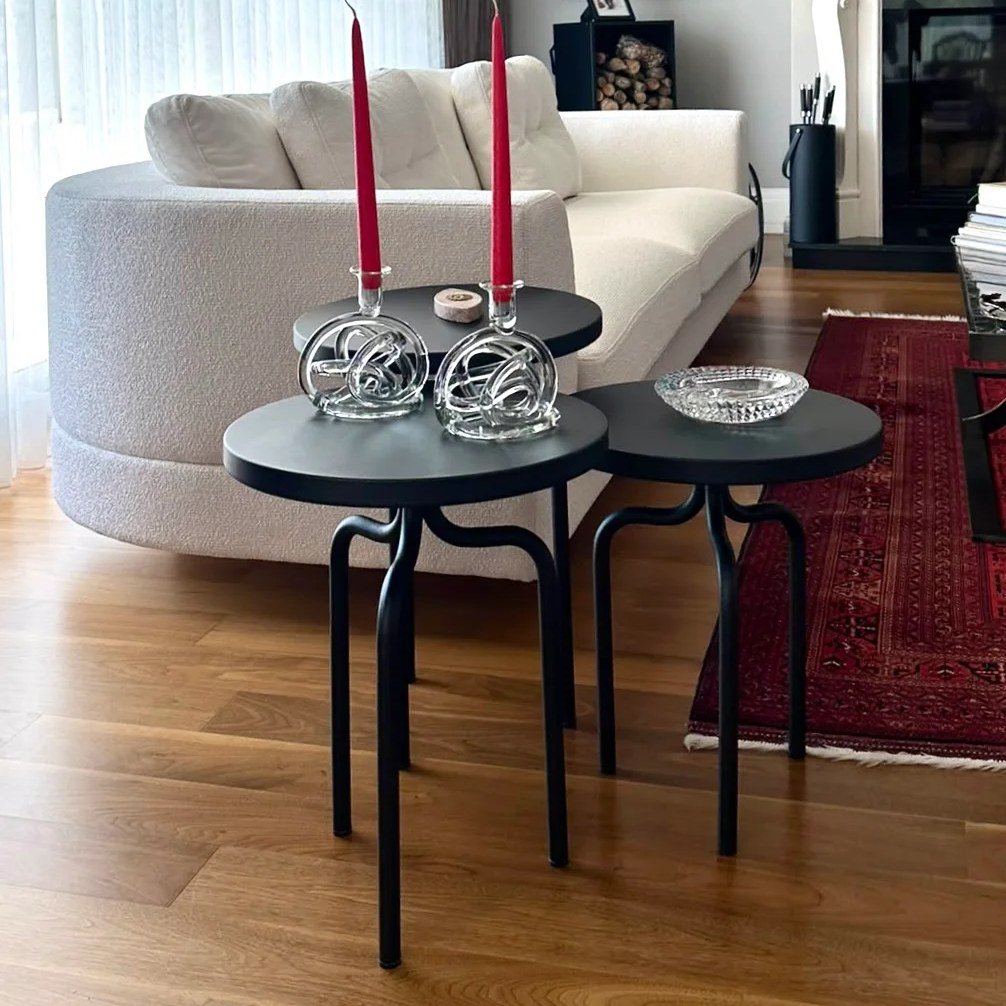
To put numbers to it, Mobo Coffee Table is made entirely of stainless steel from body to top and measures 49 x 43 x 47 cm. Trio Nesting Table is a set of three with a 40 cm tray diameter at 56, 51 and 46 cm heights. Mobo Bench carries an uninterrupted satin steel body across 100 cm. They all share the same material logic.
Frequently asked questions
Is stainless steel magnetic?
Austenitic grades such as 304 are normally non-magnetic. Cold forming, meaning bending and pressing, partly changes the structure and can produce slight magnetism, especially at bend zones. This is not a quality defect.
Is chrome plating the same as stainless steel?
No. Chrome plating is a thin chromium layer electroplated onto another metal. Once it is scratched or lifts, the metal beneath is exposed and rusts. In stainless steel the chromium is inside the alloy, not on top of it.
Should I choose 304 or 316?
For indoor furniture 304 is more than sufficient. For coastal sites, pool surrounds and anywhere with constant salt-laden moisture, 316 is the better choice.
Sources: ISSF, What is stainless steel?
our products
/ explore our shop