Custom Furniture for Interior Designers: How the Process Works

A custom furniture project runs in six steps: brief, dimensions and technical clarification, quotation, prototype or sample, production, installation and handover. The longest part is usually not production but the approval rounds. The most common cause of lost time on a project is not a slow workshop. It is a decision made late, or a start made with incomplete information.
1. Brief: what problem are we solving?
A good brief does not describe the product, it describes the problem. We want a 120 cm bench is a request. Three people need to sit at once in the waiting area, the space is 140 cm and it must not block the window behind it is a brief. The second leaves the designer room to decide, and usually produces a better result.
Three things need to be clear at this stage: how many units, in what space and at what intensity of use, and the project deadline.
2. Dimensions and technical clarification
The real dimensions of a space are rarely identical to the ones on the drawing. In work that requires installation on site, wall plumb, floor level and column projections all affect the piece directly. At this step the following are settled on the technical drawing: material and grade, surface finish, upholstery fabric, connection details, installation method.
Where stainless steel is involved, the grade decision belongs here. 304 is sufficient for interiors, 316 is needed on coastal sites and around pools. Our article on 304 vs 316 covers the detail. The finish decision belongs at the same stage, because satin and polished surfaces behave differently in a space.
3. Quotation
A quotation is not only a price. A sound one includes unit price and quantity, material and finish definition, production time, revision allowance, installation scope and warranty. Putting the revision allowance in writing up front means the mid-project request to try it another way is not a surprise to either side.
4. Prototype or sample
If quantity and budget allow, a full prototype is made. If not, material and finish samples are sent. Even a small sample shows how a surface chosen on screen behaves under real light, and that alone prevents most misunderstandings.
Approval at this step should be in writing. Verbal approval has a way of becoming a detail nobody remembers once production has started.
5. Production
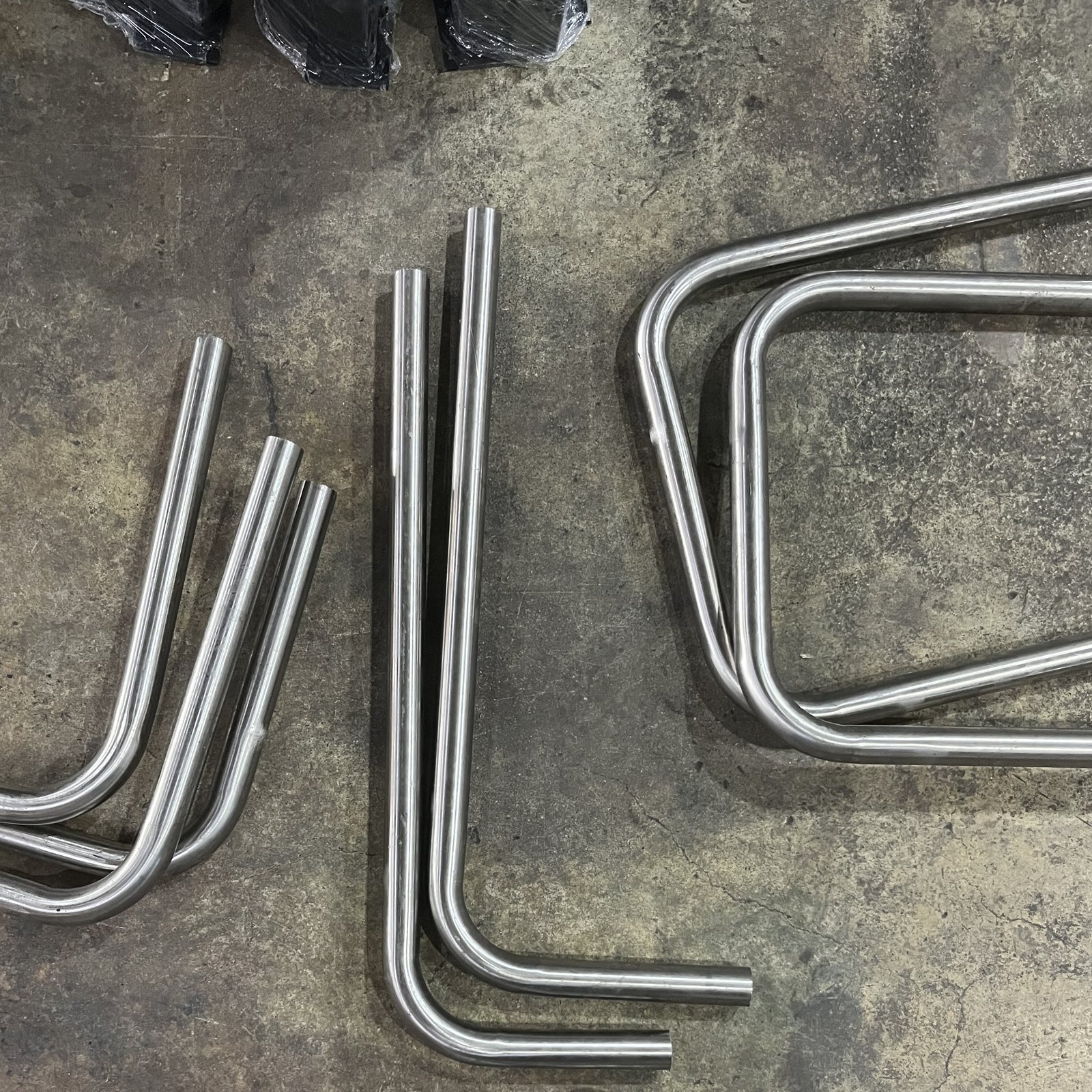
Production begins after approval. On a stainless steel piece the sequence is cutting, bending, welding, grinding, surface finishing and upholstery. Our article on how a chair is made in the workshop sets out the steps. At Cohoo, standard products are delivered roughly 20 working days after the order. On custom work the schedule is set by the scope.
6. Installation and handover
Two things are checked at handover: whether the piece matches the technical drawing, and whether it works in the space. These are different questions. A piece that matches the drawing exactly can still fail in the space because a socket or a skirting board was not accounted for. How careful the measuring step was determines how surprising the handover is.
Where the process stalls
| Stall | Cause | Prevention |
|---|---|---|
| Quotation is late | Incomplete technical information | Send dimensions and use intensity with the brief |
| Approval rounds drag | Unclear decision maker | Name a single approval contact |
| Change mid-production | Sample step was skipped | Make the sample a required step |
| Mismatch at installation | No on-site measurement | A final measuring round before production |
Working with Cohoo
Cohoo Studio works with interior design offices both on adapting the existing collection to project scale and on developing entirely bespoke pieces. Our collaboration models and our role in product development processes set out how that works in practice.
Frequently asked questions
Is a single-unit commission possible?
It is, but unit cost falls sharply with quantity. On a single unit the tooling and setup cost sits on that one piece.
Can an existing collection piece be modified for a project?
Changes to dimensions, finish and upholstery are usually possible. Changing the form itself means a new product development process.
Who keeps the technical drawing?
Intellectual property and usage rights are set by contract. Discussing this at quotation stage prevents disputes after the project closes.