Chrome, Satin and Polished Stainless: What Is the Difference?
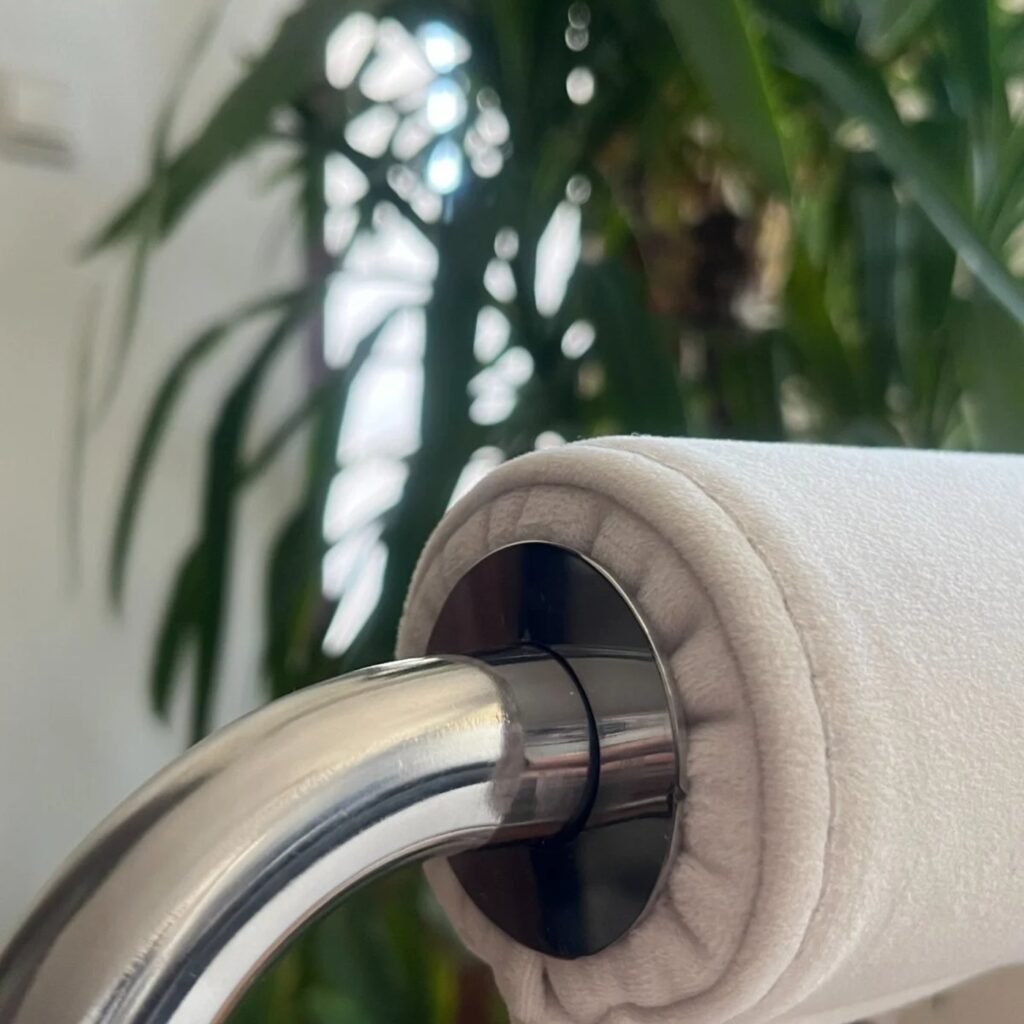
Chrome is a coating. Satin and polished are two different finishes on the same stainless steel. The comparison therefore runs on two separate levels: chrome is a material decision, satin and polished are finish decisions. If a product says chrome, there is usually another metal underneath. If it says satin stainless or polished stainless, the material is stainless steel all the way through and only the surface treatment differs.
What chrome plating is
Chrome plating is a thin chromium layer applied to another metal by electroplating. It is highly reflective and cheaper than solid stainless steel, which is why it is common in lower-priced furniture. Its weakness follows from the same fact: the protection sits on top of the surface. When the layer is scratched, knocked or lifts over time, the carrier metal is exposed and begins to rust. A blistered chrome surface cannot be repaired, only re-plated.
The second practical limit is cleaning. Chrome plating does not tolerate aggressive cleaning agents. A stainless surface is non-porous and can be cleaned with far stronger products, and even sterilised. In kitchens and hospitality settings that difference is a hygiene difference.
Satin and polished: one material, two finishes
Stainless finishes have standard names and a measurable roughness value. Ra is the average surface roughness in micrometres. The smaller the number, the closer the surface is to a mirror.
| Finish | How it is produced | Typical Ra |
|---|---|---|
| 2B | Mill finish after cold rolling | 0.1 – 0.5 µm |
| BA (bright annealed) | Annealed in a controlled atmosphere | 0.03 – 0.1 µm |
| No.4 (satin) | Mechanically brushed at 120 – 180 grit | 0.2 – 0.8 µm |
| HL (hairline) | Continuous directional brushing | 0.1 – 0.5 µm |
| No.8 (mirror) | Fine buffing and polishing | 0.02 – 0.1 µm |
A satin finish, No.4, is made of fine directional lines. It scatters light, so it reads as matte and silky. A polished surface reflects light directly and picks up the colours and movement of the room.
Which is easier to live with?
Satin hides fingerprints and everyday micro-scratches noticeably better, because the surface already has a texture and new marks disappear into it. A polished surface records every mark, and gives depth and light in return. A mirrored side table visually enlarges a small room, but it wants wiping once a week.
As a rule: satin for pieces that are touched often, polished for pieces that will be the focal point and are touched rarely. Satin has one more practical advantage. Shallow scratches can largely be worked out by following the direction of the existing grain.
Which finish do Cohoo pieces use?
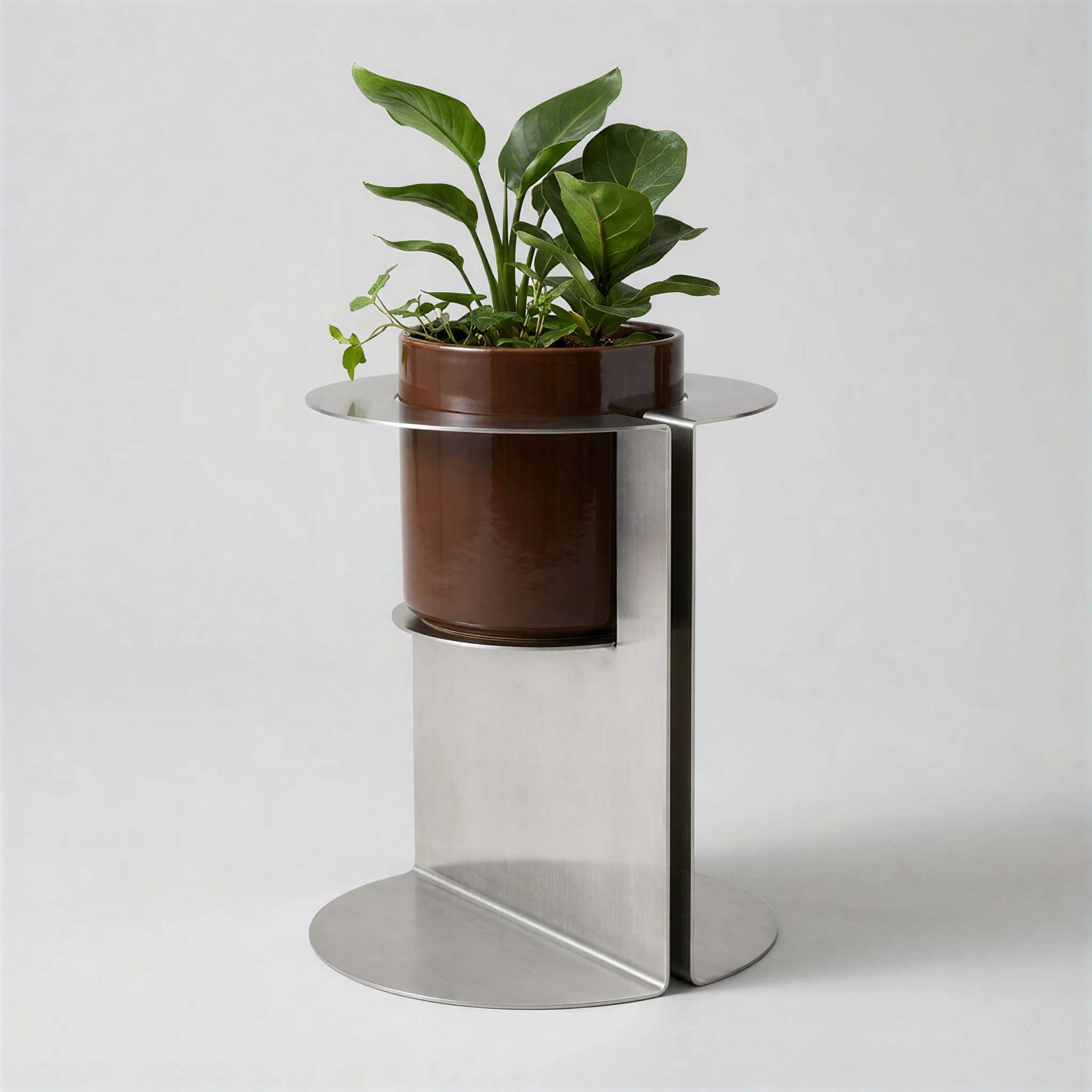
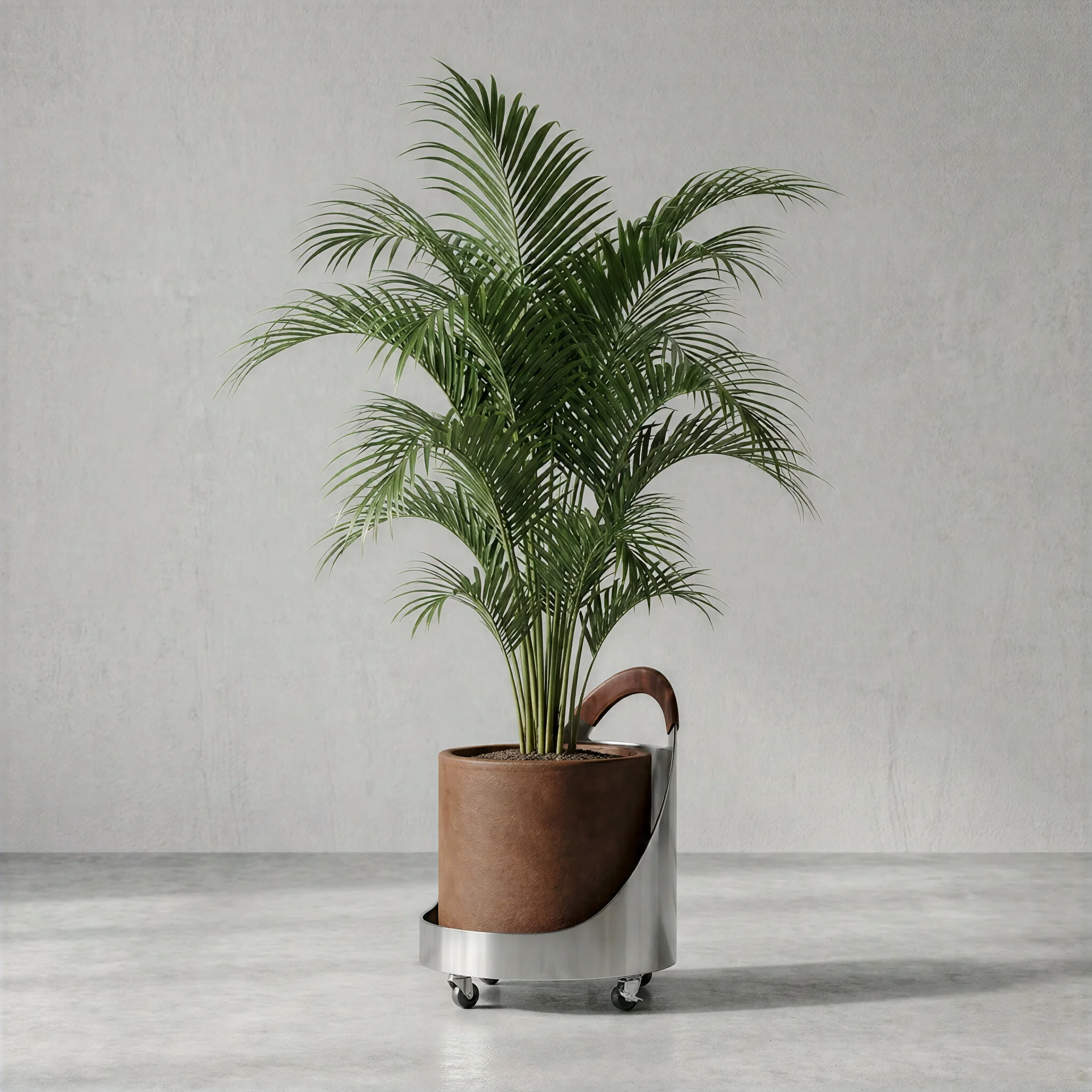
The Mobo family is built in satin stainless steel. Mobo Bar Stool and Mobo Stool carry that matte silky surface, with linen-textured upholstery to balance the coolness of the metal. Mobo Coffee Table is offered in both polished and satin stainless, so the same form can be had in two characters. The Trio Floor Lamp series also comes in polished and satin.
What they share is the material itself: whatever the finish, underneath it is 304 stainless steel. The finish is an aesthetic decision, not a lifespan decision. Our guides to what stainless steel is and to 304 vs 316 cover the material side.
Frequently asked questions
Does chrome-plated furniture rust?
It is protected as long as the plating is intact. Once a scratch, knock or blister exposes the metal underneath, rusting starts.
Does a satin finish become shiny over time?
In heavily used spots the texture can flatten slightly. That is not damage in the sense of a coating lifting, and it can be restored with a surface treatment.
Does polished stainless look like a mirror?
It depends on the finish. A No.8 mirror finish gives a true reflection, while bright annealed surfaces give a high but softer shine.
Sources: IMOA, Stainless steel mechanically applied finishes